
 Broad Spectrum Antimicrobial
 Anti-Biofilm Activity
 Immunomodulatory Support
 Wound Healing Research
 Physician-Prescribed
LL-37 Peptide - The Antimicrobial Your Body Already Makes
LL-37 is the only cathelicidin antimicrobial peptide naturally produced by the human immune system. It disrupts bacterial membranes, penetrates biofilms, and modulates immune response through mechanisms conventional antibiotics cannot match. Physician supervised LL-37 peptide protocols are launching soon. Join the waitlist for early access.
Physician Supervised LL-37 Peptide Access Is Coming Soon
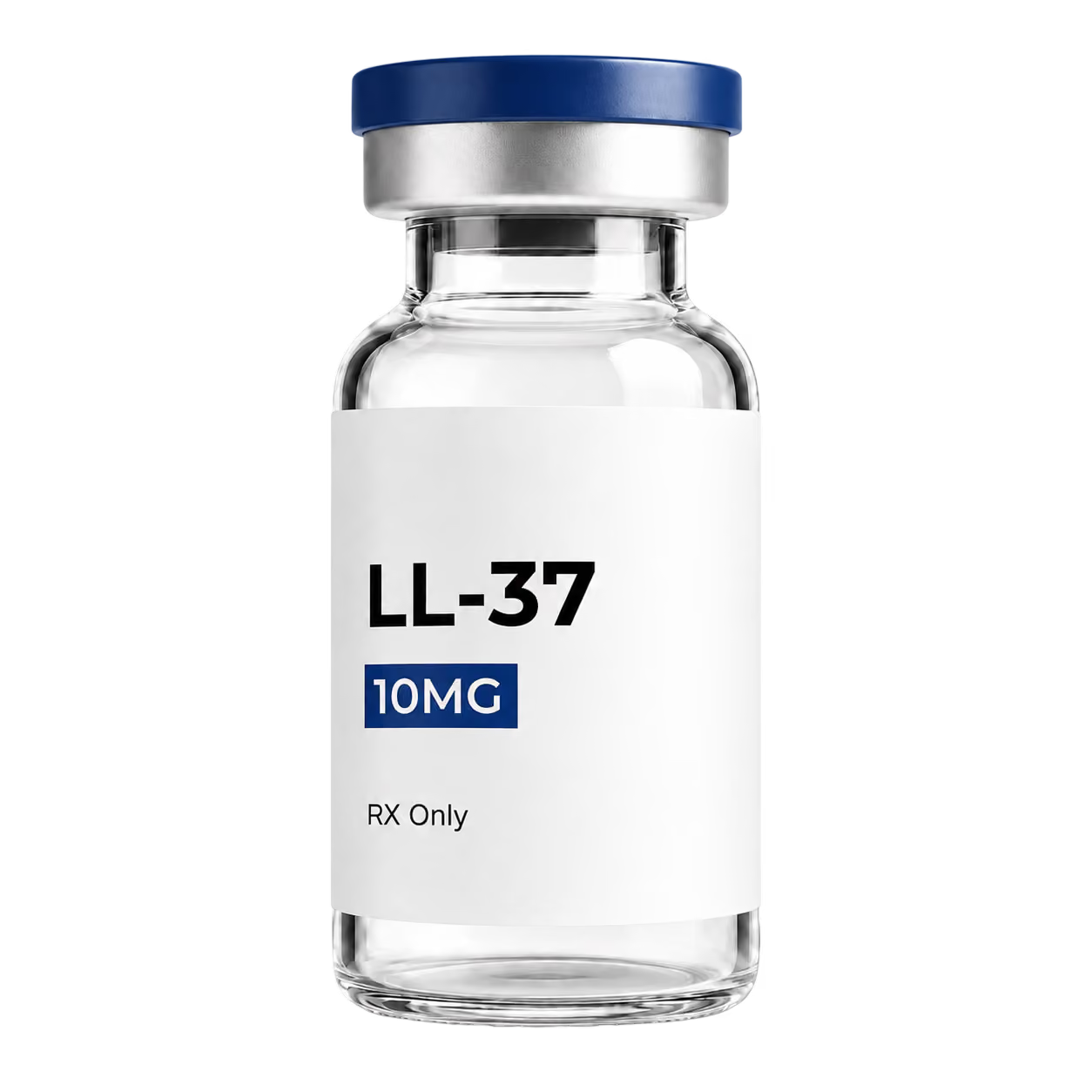
Physician Supervised LL-37 Peptide Access Is Coming Soon
LL37Direct is building a physician supervised program for LL-37 peptide therapy. Join the waitlist to receive priority access, research updates, and enrollment notification when the program launches.

Currently in development
No Hidden Fees
Coming Soon

How LL-37 Works in the Body
- 1
Membrane Disruption
LL-37 adopts an amphipathic alpha-helical structure and inserts directly into microbial cell membranes, creating pores that cause rapid cell lysis and death.

- 2
Biofilm Penetration
LL-37 disrupts the extracellular matrix of bacterial biofilms, exposing protected bacterial colonies to both the immune system and conventional antimicrobial agents.
- 3
Immune Modulation
LL-37 recruits neutrophils, monocytes, and T cells to sites of infection, promotes angiogenesis for wound repair, and neutralizes bacterial endotoxins that drive inflammatory cascades.
What It Actually Is
The Human Antimicrobial Peptide
The LL-37 peptide's antimicrobial mechanism is fundamentally different from conventional antibiotics. LL-37 forms an amphipathic alpha-helical structure that inserts directly into microbial cell membranes, creating pores that cause cell lysis and death. Because the LL-37 peptide targets the basic structural integrity of the membrane rather than a specific enzyme or metabolic pathway, bacteria find it significantly more difficult to develop resistance compared to traditional antibiotics.
More Than Just Antimicrobial
This combination of direct antimicrobial action and immune system modulation is rare among naturally occurring peptides. Defensins, the other major family of human antimicrobial peptides, primarily provide direct killing without the breadth of immunomodulatory signaling that LL-37 delivers. This dual role is why LL-37 is sometimes described as both a weapon and a signal in innate immunity.
Published Research on LL-37 Peptide
Research Area 1: Antimicrobial Activity and Resistance
LL-37 demonstrates broad spectrum antimicrobial activity against gram positive bacteria (including methicillin resistant Staphylococcus aureus, MRSA), gram negative bacteria, fungi, and certain enveloped viruses. Its mechanism of action, direct membrane disruption, is fundamentally different from conventional antibiotics that target specific bacterial processes. Published research has shown that bacteria develop resistance to LL-37 at significantly lower rates than to conventional antibiotics, because modifying membrane composition to resist LL-37 typically compromises bacterial fitness. A 2020 review in Frontiers in Immunology documented LL-37's activity against multidrug resistant pathogens and its potential role as a complementary agent in antimicrobial therapy.Research Area 2: Biofilm Disruption
Bacterial biofilms represent one of the most challenging problems in infectious disease. Biofilms are structured communities of bacteria encased in a self produced extracellular matrix that protects them from antibiotics and immune clearance. LL-37 has been shown to disrupt established biofilms at sub-inhibitory concentrations, interfering with biofilm formation and breaking down the protective matrix. Research published in the Journal of Antimicrobial Chemotherapy demonstrated that LL-37 can reduce Pseudomonas aeruginosa biofilm biomass and enhance the efficacy of conventional antibiotics when used in combination. This anti-biofilm property is particularly relevant for chronic wound infections and device associated infections.Research Area 3: Wound Healing and Immunomodulation
Beyond direct antimicrobial effects, LL-37 promotes wound healing through multiple mechanisms: stimulating keratinocyte migration and proliferation, promoting angiogenesis (new blood vessel formation), and modulating the inflammatory response to prevent excessive tissue damage. A study published in the Journal of Investigative Dermatology demonstrated that LL-37 accelerated wound closure in both in vitro and in vivo models. The peptide's ability to recruit immune cells while simultaneously controlling excessive inflammation makes it a subject of interest in chronic wound management, particularly for non healing wounds in immunocompromised populations.
Source References
- 1. Kahlenberg JM, Kaplan MJ. "Little peptide, big effects: the role of LL-37 in inflammation and autoimmune disease." Journal of Immunology. 2013;191(10):4895 to 4901. https://pubmed.ncbi.nlm.nih.gov/24185823/
- 2. Overhage J, Campisano A, Bains M, et al. "Human host defense peptide LL-37 prevents bacterial biofilm formation." Infection and Immunity. 2008;76(9):4176 to 4182. https://pubmed.ncbi.nlm.nih.gov/18591225/
- 3. Heilborn JD, Nilsson MF, Kratz G, et al. "The cathelicidin anti-microbial peptide LL-37 is involved in re-epithelialization of human skin wounds and is lacking in chronic ulcer epithelium." Journal of Investigative Dermatology. 2003;120(3):379 to 389. https://pubmed.ncbi.nlm.nih.gov/12603850/

Next-generation of Antimicrobial Defense
Conventional antibiotics are losing the resistance war. The LL-37 peptide fights differently: membrane disruption bacteria cannot easily resist, biofilm penetration conventional agents cannot achieve, and immune modulation that amplifies your body's own defense.
Join WaitlistNext-generation of Antimicrobial Defense
Conventional antibiotics are losing the resistance war. The LL-37 peptide fights differently: membrane disruption bacteria cannot easily resist, biofilm penetration conventional agents cannot achieve, and immune modulation that amplifies your body's own defense.
Join WaitlistWhat to expect?
- Step 1Complete a short online health assessment
- Step 2A licensed provider reviews your health history
- Step 3If a prescription is right for you, our partner pharmacy prepares and ships it
- Step 4Ongoing follow-up with your care team

Research findings are from preclinical and early clinical studies. These are not established clinical outcomes. LL-37 is not FDA approved for any therapeutic indication.
LL-37 Peptide Therapy
Pricing will be announced at launch.
 No hidden fees
 Personalized plans
 On-demand medical support
 Free expedited shipping
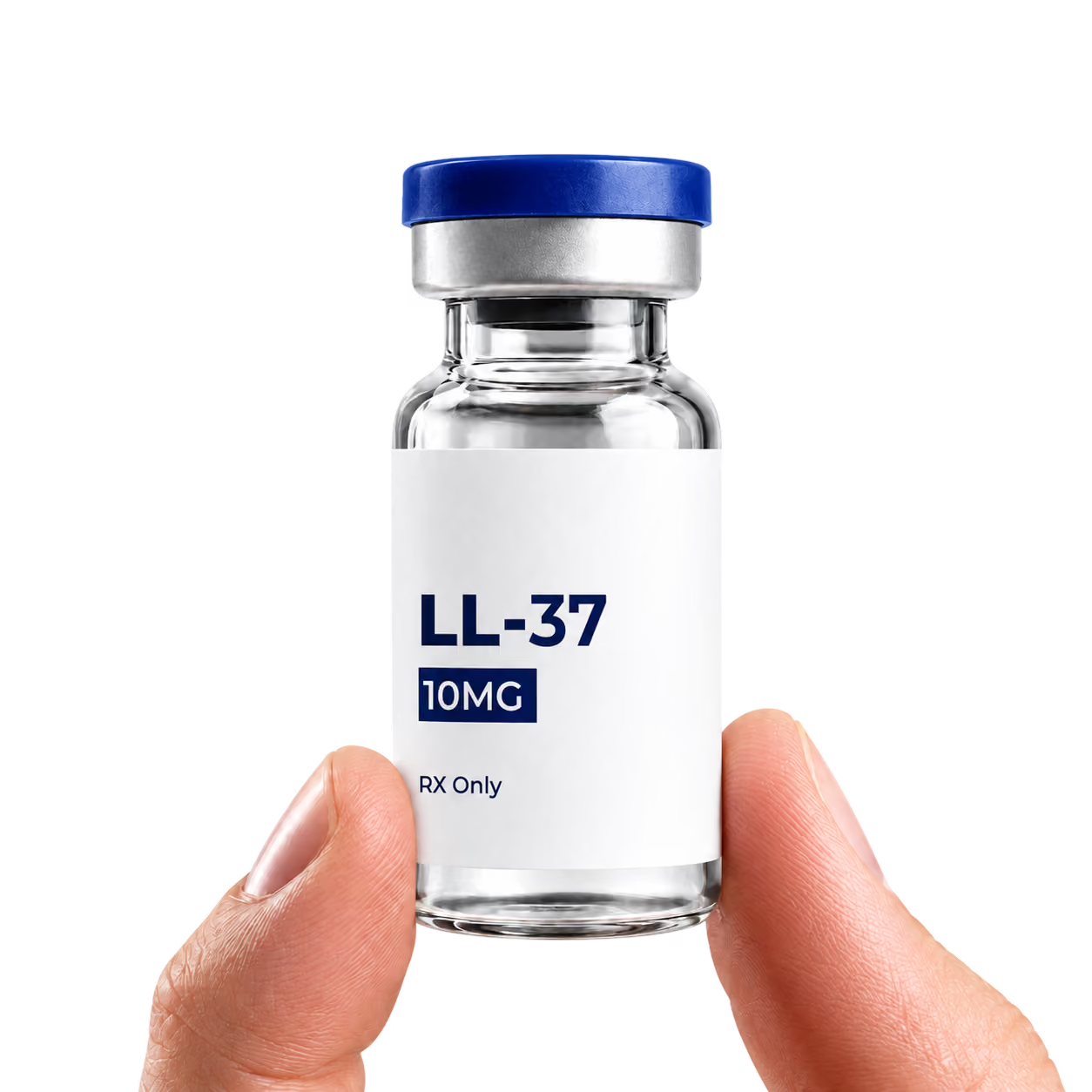

The most powerful antimicrobial system in the human body isn't a drug. It's a peptide you already produce.
LL-37 is not a synthetic pharmaceutical designed in a laboratory. It is a naturally occurring human peptide that has served as a first line immune defense for as long as humans have existed. LL37Direct is building physician supervised access to the LL-37 peptide for individuals who want to support their innate antimicrobial defense under clinical guidance.

What We Are Building
- Join Waitlist
Licensed Physician Evaluation
Every LL-37 protocol begins with a medical evaluation by a licensed physician who reviews your health history, current medications, and clinical goals.
- Join Waitlist
Compounding Pharmacy Quality
Your LL-37 formulation is prepared by a licensed U.S. compounding pharmacy in our network operating under USP standards, with identity and potency verification on every batch.
- Join Waitlist
Personalized Protocol Design
Your physician designs your LL-37 dosing schedule, administration route, and monitoring plan based on your individual assessment, not a one size fits all template.
- Join Waitlist
Ongoing Monitoring and Support
Follow up consultations allow your physician to assess your response, adjust your protocol, and ensure continued safety throughout your treatment course.
Frequently Asked Questions About LL-37 Peptide
What is LL-37?
LL-37 is the only cathelicidin antimicrobial peptide produced by the human body. It is a 37 amino acid peptide derived from the precursor protein hCAP18 and plays a central role in innate immune defense against bacteria, fungi, and certain viruses. It also modulates the immune response and promotes wound healing.
How does LL-37 work?
LL-37 works primarily by disrupting microbial cell membranes through its amphipathic alpha-helical structure. It inserts into bacterial membranes, creating pores that cause cell lysis. LL-37 also neutralizes bacterial endotoxins, disrupts biofilms, and modulates the immune response by recruiting immune cells and promoting tissue repair.
What conditions is LL-37 being researched for?
Published research has investigated LL-37 in the context of chronic wound healing, antibiotic resistant infections (including MRSA), biofilm associated infections, respiratory immune support, and inflammatory skin conditions. The research is primarily preclinical and early clinical.
Is LL-37 the same as an antibiotic?
No. LL-37 is an antimicrobial peptide, not a conventional antibiotic. It works through membrane disruption rather than targeting specific bacterial processes. This fundamentally different mechanism means bacteria find it more difficult to develop resistance to LL-37 than to traditional antibiotics. However, LL-37 has not been approved as a replacement for antibiotics.
Can bacteria become resistant to LL-37?
Bacterial resistance to LL-37 is significantly more difficult to develop than resistance to conventional antibiotics because LL-37 targets the fundamental structure of microbial membranes. While some bacterial species have evolved partial resistance mechanisms, widespread resistance has not been observed in published literature.
What is the difference between LL-37 and defensins?
Both are antimicrobial peptides in the human innate immune system, but they belong to different families. LL-37 is the only human cathelicidin, while defensins include alpha-defensins and beta-defensins. LL-37 has a broader immunomodulatory signaling profile than most defensins, including immune cell recruitment, endotoxin neutralization, and angiogenesis promotion.
What are the side effects of LL-37?
Published research on LL-37 reports a generally favorable safety profile. The most commonly reported effect is mild injection site irritation. Because LL-37 is a naturally occurring human peptide, immunogenicity risk is considered low. Comprehensive adverse event data from large-scale clinical trials is not yet available.
Is LL-37 FDA approved?
No. LL-37 is not FDA approved for any therapeutic indication. It is an investigational compound used under physician supervision in compounded formulations. All content on this site is for educational purposes only.
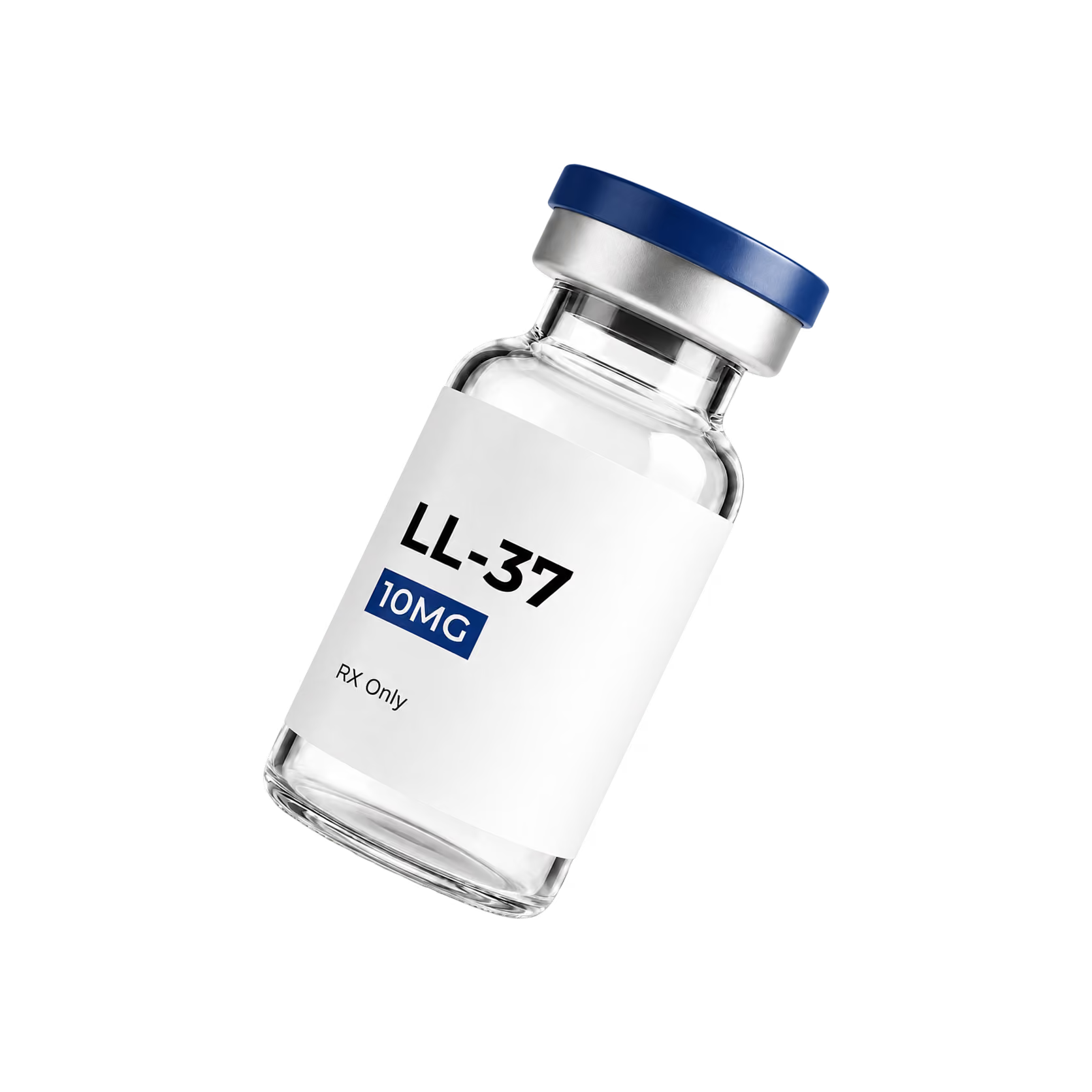
All your LL-37 questions answered
Discover everything you need to know about LL-37, including how it supports innate immune defense, its potential role in antimicrobial activity and biofilm response, and how it compares to other immune-supportive peptides.